


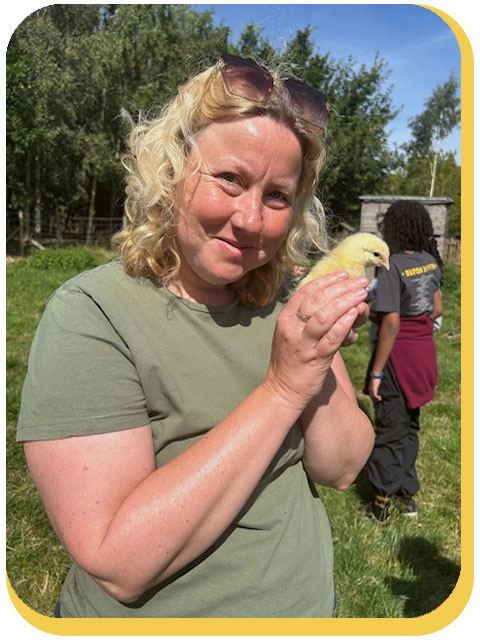
 Cheryl West has been working at Wolvercote Young People’s Club for 3.5 years. She started out there as a casual youth worker, which led to her now working with the juniors and leading the senior sessions.
What made you want to become a youth worker?
“I always wanted to work with young people and found I enjoyed working with high-risk, highly vulnerable kids. I got into youth work through simple word of mouth; someone I worked with suggested it to me and knew Wolvercote’s Young People’s Club was looking for a casual youth worker.”
Why do you work here?
“I am very passionate about youth work and contextual safeguarding. My full-time job is actually as a safeguarding officer at a secondary school. I believe that young people need a secure place to go to for support in all aspects of their lives. This is a well-known youth club locally and is a great space. The local community is also really welcoming.”
What sort of difference do you think you are making?
“Our youth club is easily accessible and provides a varied range of interventions, activities, as well as trips during the holidays. The biggest success is camping at the Name It youth festival. We camp for two nights, do lots of activities, learn how to fish, interact with farm animals, and milk goats. The kids love it.
“We sometimes host award evenings, which is especially good for young people who never get awards at school. They get certificates, and their parents or carers come along to see them receive their award.
“We also go to the local community and support and volunteer at events like the Blenheim triathlon, and community events.
“Young people may struggle to engage at the start, it depends on the individual, but they all tend to be quite reliant on youth workers. Most importantly, each week the kids reset here.”
What do you enjoy most about being a youth worker?
“Definitely having a connection with young people. A lot of people these days are scared of teenagers or don’t know how to relate to them. They are great, open, fun and enthusiastic. Occasionally, we might have a troubled young person come to us who might test the boundaries, but we work through things and help them make better choices. It is all about building relationships.
“Some of our kids are electively home educated, so this may be one of their only social interactions. Some are registered with care or are not looked after by parents. Others have had multiple fixed-term exclusions. But some of the most challenging users are the ones who do things like volunteering for events and get the most out of them. Each youth worker also brings something different. Russ, for example, is the granddad of the group, and many young people don’t have grandparents.”
What’s been your proudest moment in the role?
“The last two years' Christmas fairs at the youth club have been packed, and every stall is run by one of our young people who interact with the local community and feel really proud of what they are doing.”
What keeps you motivated?
“I know we are providing such a valuable offering. We must keep the youth club open to protect our young people and keep them safe. From the outside, we don’t know what their lived experience is. We can make solid connections with young people and help them prove they can do a lot, are valued, and belong. We want them to come out of their bedrooms, and we also like to work with parents and carers.”
What does a session usually look like?
“We usually offer activities in the kitchen, the main hall for sports, and crafts. We listen to music. Sometimes they want to chill out with their phone at the start and then start to join in. We follow the National Youth Agency Curriculum and are currently working on ‘identity’ within that. The juniors are involved in the Big Bird Watch and the Robin Award.”
What needs or challenges do youth face today?
“There is so much online harm going on. Many young people are struggling with their mental health, particularly post covid. Many of our young people are used to living in an online world and find it hard to re-engage, and there is a lot of anxiety. They also lack resilience, and everything can feel daunting to them. The wait times for agency support is terrible, and parents are at a loss for how to support their young person. I really want to do more on body image, vision boards, reputation and that sort of thing.
“We have a safeguarding portal to log situations, which is rare. We know our kids, so we know what works, such as a time out, a change of activity, a 121 talk, or we dynamically risk assess it.
“More money is needed for our and all youth clubs. The children, for example, love to go on trips.”
Can you share an example of a young person’s progress that stayed with you?
“There are so many! One young person was in a lot of trouble in the community and had multiple sanctions at school, and we had our moments here. We had to implement temporary bans and readmission procedures, but it ended up as a really successful outcome. In the end, that young person volunteered for one of our events, and everyone said he was excellent.
“We often see improvements in confidence, social skills, behaviour, and well-being. One of our current kids was very shy when they first came to the club, but now they are the first one in and much more confident.”
What would these young people do without Wolvercote Young People’s Club?
“A core group of our regulars would really struggle. Same for the more anxious, quiet ones who would then struggle with social interactions.”
What do you think we need to do more of to help the young people at Wolvercote Young People’s Club?
“I would love to offer more opportunities to build on their skills, e.g. special projects like ways to manage their money, and to learn new skills. I would love to teach them first aid.”
